Most businesses treat a booked meeting as the moment a website visitor becomes a lead. That misses everyone who was interested enough to start the booking process but did not make it all the way to the calendar confirmation.
That gap is exactly where iClosed becomes useful.
iClosed combines a scheduler, lead qualification, appointment setting, sales tracking, and lightweight CRM functions in one system. Its most important difference is simple: it can retain a prospect's information before the prospect finishes booking.
For businesses that sell through discovery calls, consultations, demos, or appointments, that changes the booking form from a pass-or-fail conversion point into an active sales channel.
The drop-off point most businesses cannot see
A standard booking flow usually looks like this:
- A prospect reads the website.
- They click the call to action.
- They enter their name, email, phone number, or qualification details.
- They reach the calendar.
- They choose a time and confirm the meeting.
Most scheduling tools pay attention to step five. If the visitor never confirms a time, the business may never know that person was there.
But people abandon calendars for ordinary reasons that have little to do with their interest in the service:
- The available times do not fit their schedule.
- They get overwhelmed by the number of choices.
- They need to check a colleague's calendar first.
- A question comes up that the website did not answer.
- They get distracted by a call, notification, meeting, or another browser tab.
- Booking a meeting suddenly feels like a bigger commitment than filling out a form.
That person is not anonymous traffic anymore. They entered contact information and raised their hand. The business simply lost them between the form and the calendar.
iClosed captures the lead before the booking is complete
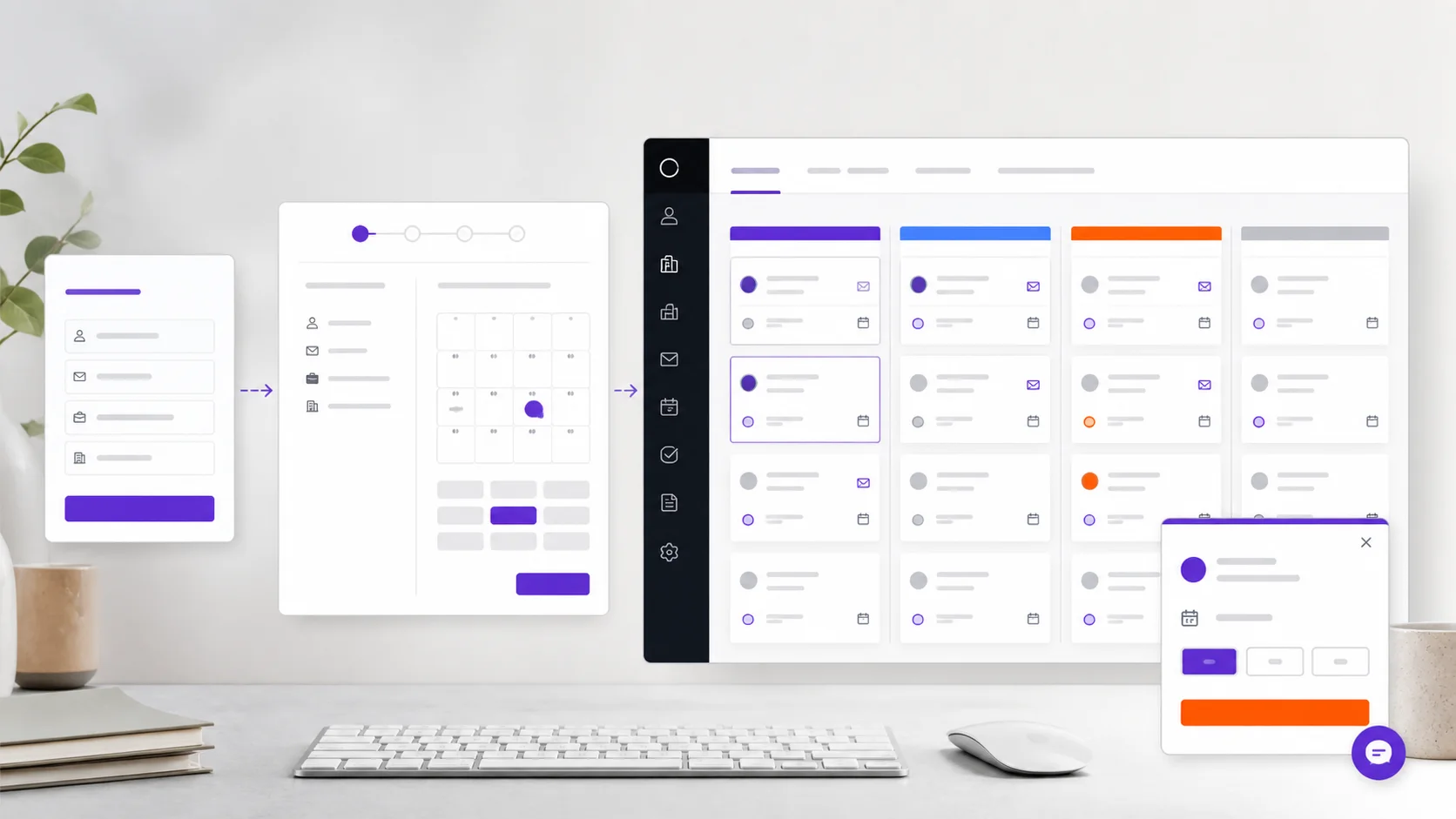
iClosed tracks contacts based on how far they travel through the scheduler. Its documentation describes a Potential contact as someone who entered information but left before finishing the form. A Qualified contact completed the questions and continued to the calendar but did not book.
Both groups can appear in iClosed's Appointment Setting view, giving a founder, setter, or sales manager a clear list of people who showed intent but never scheduled.
That distinction matters. Instead of treating every non-booker as a lost conversion, the team can see:
- Who started the process
- What information they provided
- How far they got
- Which offer or event they were interested in
- Whether they eventually booked
- Who should follow up
iClosed can also pass those lead statuses into other systems through webhooks, Zapier, Make, or its API. That makes it possible to build a recovery workflow without waiting for someone to manually check a spreadsheet.
How we recover an unbooked lead at Superspreader
At Superspreader Media, a basic recovery workflow can look like this:
- A prospect enters their contact information in the discovery-call form.
- iClosed creates or updates the contact as they move through the scheduler.
- The prospect reaches the calendar but does not confirm a time.
- The automation waits 30 minutes.
- It checks again to make sure the prospect has not booked in the meantime.
- If the meeting is still unbooked, it sends a short, friendly email.
- A reply goes to a real person who can answer a question or help find a time.
The email does not need a complicated nurture sequence. It can be as simple as:
Subject: Need help booking?
Hi [First name],
We saw you started filling out our discovery call form but did not finish booking. If you have any questions about our services or need help finding a time, just reply and let me know.
- Roman
The point is not to pressure someone because they abandoned a form. The point is to remove whatever small obstacle stopped an already-interested person from taking the next step.
The 30-minute delay gives the prospect room to finish on their own. The final status check prevents the awkward experience of emailing someone who already booked. The message stays short because the next useful action is a human conversation, not a seven-email campaign.
The Lift widget makes booking available from anywhere
Another standout iClosed feature is Lift, its floating booking widget.
Lift sits in a corner of the website and gives visitors access to the scheduler without making them hunt for a contact page, scroll back to a call-to-action section, or leave the page they are reading. A prospect can open the booking experience in a focused popup, see the offer, and start scheduling from wherever the decision happens.
That interface is especially effective on service websites where a visitor may become ready to talk halfway through a case study, service page, or article. The booking option is present without taking over the page.
Lift can be customized and limited to particular pages. It can open based on time or page depth, and its impressions, click-through rate, and captured leads can be measured. Used thoughtfully, it creates a persistent path to conversion without becoming an aggressive popup.
The key is convenience, not interruption. The widget should make the next step easier. And when a visitor opens it, enters their information, but still does not book, the same lead-capture and recovery logic can take over.
A CRM for setters and closers
iClosed can also operate as a focused CRM.
Calling it focused does not mean it is incomplete. With contact records, pipelines, stages, setter ownership, scheduled calls, outcomes, transactions, analytics, and role-based team views, it can serve as the full CRM for many appointment-driven businesses.
For many small and growing businesses, implementing a large CRM is putting the cart before the horse. They spend weeks defining fields, deal stages, dashboards, automations, and long nurture sequences before they have enough active lead flow to justify the machinery.
What they need first is often much simpler:
- A steady flow of interested prospects
- Immediate visibility when someone raises their hand
- Clear ownership of every lead
- Fast human follow-up
- A simple way to book calls and record outcomes
- Enough reporting to know where the sales process is leaking
That is the role iClosed can fill. In practice, it behaves like a CRM for setters and closers rather than a database built primarily for administrators.
A solo founder can use it to stay on top of every inquiry. A small sales team can assign unbooked leads to setters, route qualified calls to closers, track who owns each contact, record call outcomes, and review team performance from the same operating view.
The Appointment Setting workspace is built around action. Unbooked leads remain visible until someone works them, qualifies them, rejects them, or books the appointment. A setter can even schedule a call for the lead while speaking with them, which removes another round of calendar friction.
It does not need to replace every sales system
iClosed will not replace every enterprise CRM use case. Companies with complex account hierarchies, long implementation cycles, customer-success workflows, or detailed revenue forecasting may still need a broader platform such as HubSpot or Salesforce.
That does not reduce iClosed's value. It makes the role clearer.
The system can be the operational layer closest to the lead: capture the contact, qualify the opportunity, create the human response, book the call, and track the outcome. Relevant information can then be synchronized with a broader CRM when the business actually needs one.
Who is iClosed best suited for?
iClosed is especially compelling when:
- The primary conversion is a call, demo, consultation, or appointment.
- Each qualified conversation has meaningful revenue potential.
- The business is already sending traffic to a booking form.
- Founders or a small sales team handle leads directly.
- Speed to lead has a measurable effect on close rates.
- Too many prospects start the form but fail to book.
- The business wants useful sales infrastructure without a long CRM implementation.
It is less about adding more software and more about protecting the demand the business already paid to create.
The implementation matters as much as the tool
Installing iClosed is not the same as building a good lead-recovery system. The workflow still needs judgment.
We pay attention to a few fundamentals:
- Keep the form focused. Ask only for information the sales process will actually use.
- Make consent and privacy clear. The visitor should understand how their information may be used and contacted.
- Check status before every follow-up. Booked prospects should immediately leave the recovery workflow.
- Keep the first message human. Offer help before introducing a sequence or sales pitch.
- Route replies to a person. Automation should create a faster human interaction, not become a substitute for one.
- Measure recovered revenue. Track how many abandoned forms become booked calls, attended calls, qualified opportunities, and customers.
The real value is what happens before the calendar confirmation
The obvious purpose of scheduling software is to put meetings on a calendar. The more valuable purpose is to preserve intent while it is still fresh.
iClosed makes that possible by capturing prospects earlier, keeping unbooked leads visible, making the booking experience available through a polished corner widget, and giving setters and closers a focused place to work.
For a business with active lead flow, one recovered conversation can be worth more than months of software fees. More importantly, the system closes a gap that most businesses do not realize they have.