




raxxos.com
Microsoft 365
Why Microsoft Copilot Isn’t Just Rebranded ChatGPT
2026-04-24
RT
Raxxos Technology Inc.
214 followers
3mo · 🌐
Nearly all small businesses using AI tools say it's made them more efficient. That's all good and well, but we need to ask what those businesses are doing to protect themselves while they adopt it. Most SMBs we talk to in the Lower Mainland have employees using AI tools daily, but very few have clear policies around what data can be shared with those tools, how outputs should be reviewed, or what platforms are actually approved for business use. That gap between adoption and governance is where the risk lives. Not because AI is dangerous, but because without guardrails, sensitive client data ends up in places it shouldn't and employees develop workflows that are hard to secure retroactively. We put together a free Employee AI Usage Policy template to help with exactly this. Comment "template" and we'll send it over, our gift to the business community!
👍 ❤️ 💡  Like · Comment · Repost
raxxos.com
raxxos.com
AI & Automation
Google NotebookLM: Should Your BC Business Use It? (And What Microsoft 365 Users Should Know)
2026-04-02
KM
Kelly Massey · 1st
Founder of Raxxos Technology Inc. 🇨🇦 Your Trusted Technology Partner in the Lower Mainland.
10mo · 🌐
"We don't do development work" - A conversation that happens way too often Had another chat this week where someone assumed we build software. I get it - "IT company" can mean a lot of things these days. So let me be crystal clear about what Raxxos actually does: We're your on-demand IT support department. Think of us as the tech support team you wish you had in-house, but without the overhead. Here's what that looks like in real life: • Your internet goes down at 2 PM and your team can't work → We fix it • You need 10 new computers set up for your growing team → We handle it • Your server is acting up and slowing everything down → We diagnose and resolve it • You want to prevent tech disasters before they happen → We monitor and maintain your systems We're not building apps or websites... Rather, we're keeping your existing technology running smoothly so you can focus on running your business. If your team has ever lost hours to a computer problem that "someone should really look at," that's exactly what we're here for. Business owners in Surrey, Langley, etc: We are still offering that first fix free (up to 2 hours) if you want to see what proper IT support looks like. And yes, we pay for referrals!
👍 ❤️ 💡  Like · Comment · Repost
raxxos.com
Business Technology
Windows 10 End of Life: What BC Businesses Should Do Now
2026-03-21
raxxos.com
Cybersecurity
2026 Tax Season Phishing Scams In British Columbia
2026-03-20
raxxos.com
Microsoft
No, You Don’t Need to Worry About Windows 12 Yet
2026-03-06
raxxos.com
Cybersecurity
Restaurant Cybersecurity: A Practical Guide for Vancouver, Surrey, and Langley Operators
2026-01-16
raxxos.com
Artificial Intelligence
Cybersecurity Tips for Local Surrey and Langley Businesses in 2026
2026-01-09
raxxos.com
Microsoft 365
Why Microsoft Copilot Isn’t Just Rebranded ChatGPT
2026-04-24
RT
Raxxos Technology Inc.
214 followers
3mo · 🌐
Nearly all small businesses using AI tools say it's made them more efficient. That's all good and well, but we need to ask what those businesses are doing to protect themselves while they adopt it. Most SMBs we talk to in the Lower Mainland have employees using AI tools daily, but very few have clear policies around what data can be shared with those tools, how outputs should be reviewed, or what platforms are actually approved for business use. That gap between adoption and governance is where the risk lives. Not because AI is dangerous, but because without guardrails, sensitive client data ends up in places it shouldn't and employees develop workflows that are hard to secure retroactively. We put together a free Employee AI Usage Policy template to help with exactly this. Comment "template" and we'll send it over, our gift to the business community!
👍 ❤️ 💡  Like · Comment · Repost
raxxos.com
raxxos.com
AI & Automation
Google NotebookLM: Should Your BC Business Use It? (And What Microsoft 365 Users Should Know)
2026-04-02
KM
Kelly Massey · 1st
Founder of Raxxos Technology Inc. 🇨🇦 Your Trusted Technology Partner in the Lower Mainland.
10mo · 🌐
"We don't do development work" - A conversation that happens way too often Had another chat this week where someone assumed we build software. I get it - "IT company" can mean a lot of things these days. So let me be crystal clear about what Raxxos actually does: We're your on-demand IT support department. Think of us as the tech support team you wish you had in-house, but without the overhead. Here's what that looks like in real life: • Your internet goes down at 2 PM and your team can't work → We fix it • You need 10 new computers set up for your growing team → We handle it • Your server is acting up and slowing everything down → We diagnose and resolve it • You want to prevent tech disasters before they happen → We monitor and maintain your systems We're not building apps or websites... Rather, we're keeping your existing technology running smoothly so you can focus on running your business. If your team has ever lost hours to a computer problem that "someone should really look at," that's exactly what we're here for. Business owners in Surrey, Langley, etc: We are still offering that first fix free (up to 2 hours) if you want to see what proper IT support looks like. And yes, we pay for referrals!
👍 ❤️ 💡  Like · Comment · Repost
raxxos.com
Business Technology
Windows 10 End of Life: What BC Businesses Should Do Now
2026-03-21
raxxos.com
Cybersecurity
2026 Tax Season Phishing Scams In British Columbia
2026-03-20
raxxos.com
Microsoft
No, You Don’t Need to Worry About Windows 12 Yet
2026-03-06
raxxos.com
Cybersecurity
Restaurant Cybersecurity: A Practical Guide for Vancouver, Surrey, and Langley Operators
2026-01-16
raxxos.com
Artificial Intelligence
Cybersecurity Tips for Local Surrey and Langley Businesses in 2026
2026-01-09
ZP
Zane Pucylowski · 1st
President / Principal Engineer at Phoenix Engineering and Consulting, Inc.
8h · 🌐
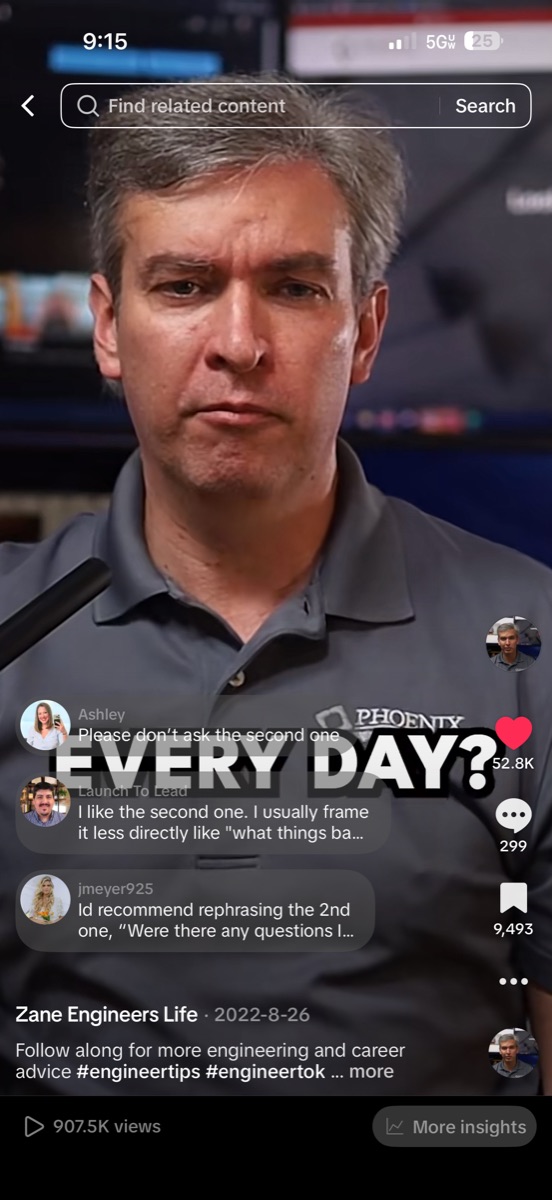
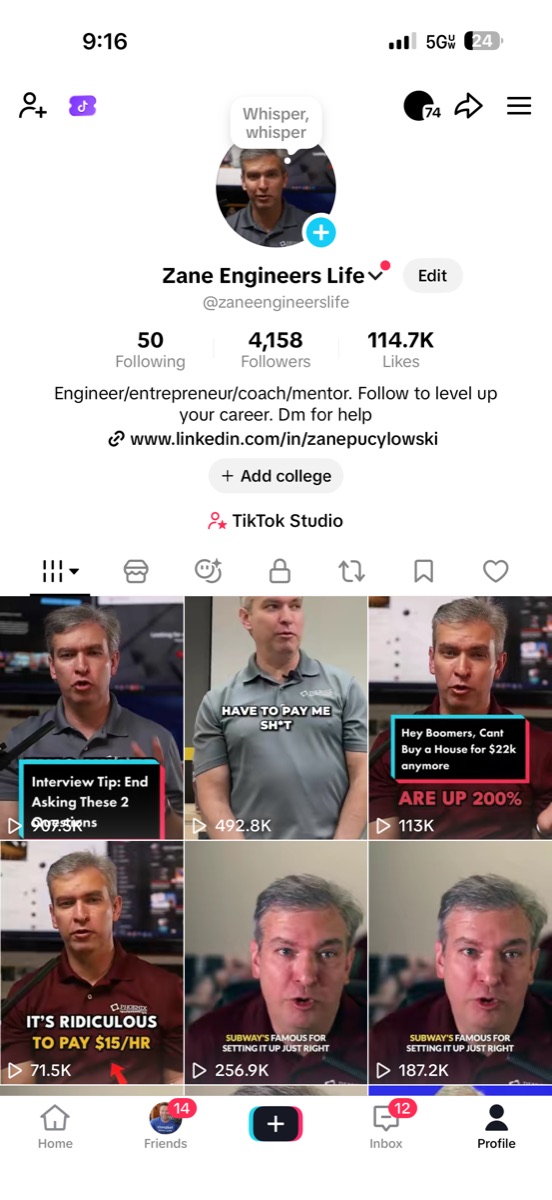
The bar is SO low in most workplaces that young engineers have a huge opportunity. That is not me being negative. That is me telling you where the opening is. A bunch of people show up and are just .... there. They wait. They complain. They need 4 reminders. They avoid the weird problem. They do the exact task but never think through the actual outcome. If you are in your first engineering job, you don't need to know everything. You need to be USEFUL. Show up early. Ask better questions. Take the ugly task. Write things down. Follow up before someone asks. Find the person w/ the problem and make their life easier. Do that for 6 months and watch what happens. Your first year is not about proving you are the smartest person in the building..... It is about proving you can be trusted. That trust compounds.... GO earn it!!!
👍 ❤️ 💡  Like · Comment · Repost
cyberverify.com
raxxos.com
Business Technology
Your Business Moved to the Cloud. AI Might Be the Reason Some of It Comes Back.
2026-04-10
KM
Kelly Massey · 1st
Founder of Raxxos Technology Inc. 🇨🇦 Your Trusted Technology Partner in the Lower Mainland.
7mo · 🌐
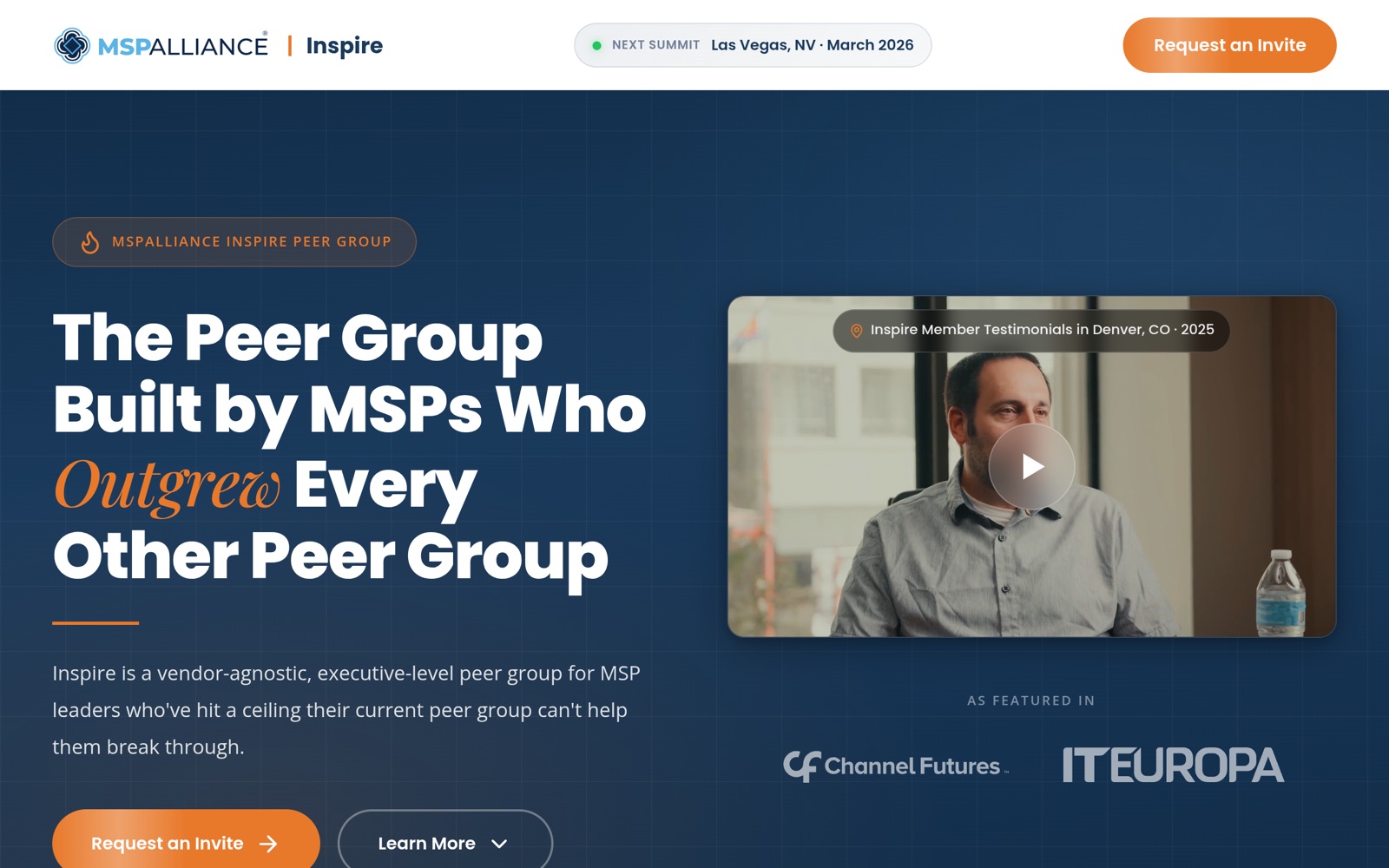
Lately, I've been reminded how fast things really change in business. Just when you think you've got it figured out, things flip... markets shift, old leads resurface after years, and new opportunities pop up from places you'd never expect! If there's one lesson I could send to my old self, it's this: never stop marketing, keep your pitch constant, and always have an iron in the fire. And whatever you do... don't burn bridges! So many of my deals have come from people I'd never thought I'd see again... sometimes 5-10 years later!
👍 ❤️ 💡  Like · Comment · Repost
inspire-landing-page-green.vercel.app
RM
Roman Massey · You
Professional Life Enjoyer
4mo · 🌐
Example of how I'm using AI. I ran a marketing consultation yesterday where we were brainstorming a new offer. Place laptop between me and client, fire up Cluely, interview them for 20 minutes. I paste the transcript into Claude Code and while it's cranking, we build a launch list of 1,000 contacts in lemlist. Then in 5 minutes we are reviewing what it produced, a landing page draft, outreach scripts, and pricing structure. Make some small changes, paste landing page code into Wordpress, paste the outreach scripts into a Lemlist sequence, ready to launch. 3 years ago, would've taken at least a week of back & forth with designers and other subs. Now we launch within an hour of having an idea.
👍 ❤️ 💡  Like · Comment · Repost
ZP
Zane Pucylowski · 1st
President / Principal Engineer at Phoenix Engineering and Consulting, Inc.
8h · 🌐
The bar is SO low in most workplaces that young engineers have a huge opportunity. That is not me being negative. That is me telling you where the opening is. A bunch of people show up and are just .... there. They wait. They complain. They need 4 reminders. They avoid the weird problem. They do the exact task but never think through the actual outcome. If you are in your first engineering job, you don't need to know everything. You need to be USEFUL. Show up early. Ask better questions. Take the ugly task. Write things down. Follow up before someone asks. Find the person w/ the problem and make their life easier. Do that for 6 months and watch what happens. Your first year is not about proving you are the smartest person in the building..... It is about proving you can be trusted. That trust compounds.... GO earn it!!!
👍 ❤️ 💡  Like · Comment · Repost
cyberverify.com
raxxos.com
Business Technology
Your Business Moved to the Cloud. AI Might Be the Reason Some of It Comes Back.
2026-04-10
KM
Kelly Massey · 1st
Founder of Raxxos Technology Inc. 🇨🇦 Your Trusted Technology Partner in the Lower Mainland.
7mo · 🌐
Lately, I've been reminded how fast things really change in business. Just when you think you've got it figured out, things flip... markets shift, old leads resurface after years, and new opportunities pop up from places you'd never expect! If there's one lesson I could send to my old self, it's this: never stop marketing, keep your pitch constant, and always have an iron in the fire. And whatever you do... don't burn bridges! So many of my deals have come from people I'd never thought I'd see again... sometimes 5-10 years later!
👍 ❤️ 💡  Like · Comment · Repost
inspire-landing-page-green.vercel.app
RM
Roman Massey · You
Professional Life Enjoyer
4mo · 🌐
Example of how I'm using AI. I ran a marketing consultation yesterday where we were brainstorming a new offer. Place laptop between me and client, fire up Cluely, interview them for 20 minutes. I paste the transcript into Claude Code and while it's cranking, we build a launch list of 1,000 contacts in lemlist. Then in 5 minutes we are reviewing what it produced, a landing page draft, outreach scripts, and pricing structure. Make some small changes, paste landing page code into Wordpress, paste the outreach scripts into a Lemlist sequence, ready to launch. 3 years ago, would've taken at least a week of back & forth with designers and other subs. Now we launch within an hour of having an idea.
👍 ❤️ 💡  Like · Comment · Repost
raxxos.com
AI & Automation
Your Competitor Might Already Have an AI That Answers Their Phone. Here’s What That Looks Like.
2026-04-13
RT
Raxxos Technology Inc.
214 followers
3mo · 🌐
88% of ransomware attacks in 2025 targeted small businesses, not enterprise companies or government agencies; but companies with fewer than 100 employees. The most common assumption we hear from business owners in the Lower Mainland is that they're too small to be worth targeting, but the data tells a different story. Attackers specifically go after smaller companies because the security gaps tend to be wider and the payouts tend to come faster. The encouraging part is that most of these attacks exploit basics that are fairly easy to address: lack of or un-tested backups, no employee cyber training, and no network / device monitoring. You don't need an enterprise-level security budget to close those gaps, you just need someone keeping an eye on things proactively so problems get caught before they become incidents. If you're not sure where your vulnerabilities are, we're happy to do a quick assessment and give you a straight answer. Also, we created an Employee AI Usage Policy template as a gift to the business community. Comment "template" and we'll send it to you.
👍 ❤️ 💡  Like · Comment · Repost
project-rwpef.vercel.app
raxxos.com
AI & Automation
What Is OpenClaw and What Does It Actually Look Like When a Business Uses It?
2026-03-24
raxxos.com
AI & Automation
Your Competitor Might Already Have an AI That Answers Their Phone. Here’s What That Looks Like.
2026-04-13
RT
Raxxos Technology Inc.
214 followers
3mo · 🌐
88% of ransomware attacks in 2025 targeted small businesses, not enterprise companies or government agencies; but companies with fewer than 100 employees. The most common assumption we hear from business owners in the Lower Mainland is that they're too small to be worth targeting, but the data tells a different story. Attackers specifically go after smaller companies because the security gaps tend to be wider and the payouts tend to come faster. The encouraging part is that most of these attacks exploit basics that are fairly easy to address: lack of or un-tested backups, no employee cyber training, and no network / device monitoring. You don't need an enterprise-level security budget to close those gaps, you just need someone keeping an eye on things proactively so problems get caught before they become incidents. If you're not sure where your vulnerabilities are, we're happy to do a quick assessment and give you a straight answer. Also, we created an Employee AI Usage Policy template as a gift to the business community. Comment "template" and we'll send it to you.
👍 ❤️ 💡  Like · Comment · Repost
project-rwpef.vercel.app
raxxos.com
AI & Automation
What Is OpenClaw and What Does It Actually Look Like When a Business Uses It?
2026-03-24

SUPERSPREADER MEDIA

Scale marketing without the headcount.

Get The Superspreader Method, our full playbook, free.

The exact system we run for B2B brands.

Book a call
Superspreader Media · the free playbook

The Superspreader
Method

The exact system we use to run content for B2B brands. One operator, an AI agent per client, and the output of a team of five. Every step is documented so you can copy it. Build it yourself, or have us run it for you.

15 chaptersscroll to begin
01
Start here

Map where your business actually comes from

This is the first thing we do on almost every discovery call, before a single word about content. We map where your business actually comes from. The answer usually changes the plan.

List every lead source and the number

Name every place a lead comes from, and how many you get from each per month. Referrals, word of mouth, ads, content, your existing list, partnerships, all of it, with real numbers. Most businesses have never written this down. The moment you do, the picture gets obvious fast.

Most businesses run on one or two sources

What we see most often is one or two channels actually driving the business, with a long tail of sources that barely move the needle. The instinct is to go add more channels. That is usually the wrong move. It tends to scatter your time and attention, and in most cases those one or two primary sources are nowhere near maxed out. Worth checking before you assume you need something new.

Expanding usually beats adding

A new lead source tends to lag. It splits your focus, takes months to figure out, and might never pay off. Expanding a channel that already works can return much faster. If ads bring you business, could you spend twice as much? If content works, could you post twice as much? Often the answer is yes, and that is usually the place to start.

Make your biggest source systematic

The most common version of this is referrals. Where do you get business? Referrals, mostly. Tell me about your referral system. There is none. You just get the occasional call where someone says so and so sent them. So your single biggest lead source is the one you put the fewest resources into. Almost every business has a source like this: large, and completely unmanaged.

Turn it into an actual system, the Jay Abraham way. A source you can repeat on purpose is worth far more than one you hope shows up, and for a lot of businesses this returns more, and faster, than standing up a brand new channel from zero.

1
Ask on purposeBuild the ask into your process: after a win, at project close, in your regular check-ins. Most referrals never happen because nobody asked.
2
Make it effortlessHand them the words, the link, the intro to forward. The less work it is to send one, the more you get.
3
Give a reason and a rewardA genuine thank you, a referral back, a real incentive. People send more when it is recognized.
4
Stay in front of past clientsYou are the name they pass along only if you are top of mind. Keep showing up so you are the obvious one to recommend.
Before you decide to start making contentFirst ask whether content is even the channel to expand, or whether there is an easier win sitting in a source you already have. When content is the right move, the rest of this playbook is how to do it properly.
02
The menu

The lead sources worth your attention

Once you know what you already have and you have pushed it, here is the wider menu. Most businesses should deepen one or two of these, not chase all of them. We go deepest on content and personal brand, because that is what we run and what compounds.

Treat this as a checklist, not a to-do list. Run each option through the same test from the last chapter: is this closer to how I already win than the source I could simply expand? Pick deliberately.

Referrals and word of mouth

Your warmest source and usually your best, which is why it came first. If you have not made it systematic yet, start there before anything below.

Personal brand on social

You, posting as yourself, on the platforms your buyers actually use. This is the highest-trust channel most B2B businesses have, because people hire people. It is slow to start and compounds hard. Most of this playbook is about doing this one well, because it is the source we have seen pay off the most for founders and operators.

Company brand on social

The brand account, posting as the company. It does a different job than your personal feed: it is the credible, always-on presence a prospect checks to confirm you are real and active. On its own it rarely drives the relationship the way a personal brand does, but it backs you up. Run both, and let the personal account carry the trust.

LinkedIn outreach

Direct, targeted outbound to the exact people you want as clients. Done well, it is a precise way to start conversations with named buyers instead of waiting to be found. Done badly, it is spam, and it burns your name. The version that works is personal, researched, and useful from the first message, and it lands far better when the person you reach can look you up and find a real personal brand waiting. Outreach and content feed each other.

Press releases and earned media

Getting covered by someone who already has an audience: a trade publication, a podcast, a local outlet, an industry newsletter. A press release is the on-ramp. It will not go viral, but earned coverage does three useful things: it lends third-party credibility you cannot give yourself, it builds backlinks and search authority, and it gives you proof to repurpose into your own content. Tie a release to something real, a launch, a milestone, a piece of data, a hire, so there is an actual reason to run it.

Worth knowing, in the right situation

  • Search and SEO: be the result when your buyer types the problem into Google. Slow, durable, and your content feeds it directly.
  • Paid ads: the fastest source to scale, but only once the math works. Best for amplifying a message you have already proven organically.
  • Email and your existing list: the cheapest, most owned channel you have. People who already know you convert far easier than strangers.
  • Partnerships and channel: borrow an audience someone else spent years building, by sending business both ways or co-marketing.
  • Events, speaking, and podcasts: the highest-trust rooms there are. One talk in front of the right audience can outperform months of posting.
Which to pickIn most cases the answer is not all of them. Deepen the one or two closest to how you already win, and make them systematic before chasing a new line on this list. For most founders we work with, that is personal brand plus referrals, which is exactly what the rest of this playbook builds.
03
Philosophy

Stop trying to go viral

Virality is a vanity metric. The goal was never a million strangers. It is the forty people who can actually buy from you deciding you are the obvious choice.

Most marketing advice optimizes for reach. Reach is easy to measure and almost never the thing that pays you. A post that gets two million views from teenagers in another country does nothing for a B2B company selling a forty thousand dollar service.

Dog-whistle to your perfect prospect

Great B2B content is a dog whistle. It is tuned so precisely that your ideal buyer reads it and thinks this person gets my exact problem, while everyone else scrolls past. You are not writing for the algorithm. You are writing for the twelve decision makers who will recognize themselves in it.

Specificity beats breadth. Name the industry. Name the situation. Reference the detail only an insider would know. The narrower it feels, the more the right person trusts it.

Clickbait reads as a trick

Clickbait and hard-sell tactics usually do the opposite of what people hope. To a sophisticated buyer they signal insecurity, or worse, dishonesty. The moment your content feels engineered to manipulate, trust drops. Honesty wins more deals than polish, because what you are really earning is trust.

The testBefore you publish, ask: would my best client respect this, or quietly cringe at it? If there is any cringe, it is not ready.
04
Principles

Make content that moves people

Three rules we come back to constantly. They decide whether a piece lands or gets scrolled past.

Sell online like you sell in person

You already know how to do this. When a good prospect is sitting across from you, you do not recite features. You tell them about the client just like them, the mistake everyone makes, what you would do in their shoes. Online is the same. Write the way you would actually talk to one interested person. The polish people add for the internet is usually what kills it.

Your coffee shop stories are your content

Notice what makes people lean in when you talk. The thing you mention at the coffee shop that gets a reaction, the story at the office that lands, the offhand opinion that starts an argument. That is a hook, and it is a piece of content. Most people let those moments evaporate. Write them down and you will never run out of material.

Inspire first, then warn, then inform

There is a hierarchy to content that moves people. Inspirational beats fear based, and fear based beats pure information. Information on its own is the weakest, it is what everyone already publishes and nobody remembers. Lead with the future they want, or the cost of getting it wrong, then deliver the facts inside that frame. Same information, completely different result.

05
Assets

Build a brand brain

Before any agent writes a word, it needs to know exactly who it is speaking as. That is two assets: your company voice and your personal voice. Write them down and version them like any other system you depend on.

The company brand voice

Write it down. Not a mood board, a document. What you believe, what you will never say, the words you ban, the way you hedge, the proof you can cite that no competitor can. We call it a brand bible. Every real client scenario, every contrarian opinion, every specific number lives here. It is the thing that makes your content impossible to copy, because it is rooted in your business, not the open internet.

  • What you believe: your theses and your hot takes
  • Banned words and AI tells: leverage, seamless, unlock, robust, em dashes
  • Proof only you can cite: clients, numbers, local knowledge
  • How you hedge, so you sound honest instead of absolute

The personal brand voice

The buying process changed. Before anyone hires you, they look you up. The first thing they often check is your Instagram, not your website. Your personal presence is now part of the sale.

There is a real case for posting more than business content. Trust is built on the parts of you that exist outside work. Sharing some of your life, your family, what you are building, makes you a person instead of a logo. That is not for everyone, and privacy is personal. Pick your own line. But know that a buyer who feels like they already know you is far closer to yes.

Company brand voicePersonal brand voice
Your agentContent that sounds like you
Why two voicesThe company voice sells the company. The personal voice sells you. B2B buyers hire people they trust, then justify it with the company. You need both, and an agent trained on each.
06
The engine

Give every brand an agent

This is the part that feels like cheating. You stand up one AI agent per brand, train it on the two voices, and give it hands. From then on you direct and it produces.

The agent

We run Hermes, an open-source agent from Nous Research, with a separate profile for each client. Each profile holds a persona, a memory file, and the brand bible from chapter two. It remembers how the client talks, what they will not say, and what they are working toward, across every session. You can do this with any capable agent framework. The point is one trained agent per brand, not one generic chatbot for everything.

If you live in code, set up a Claude Code workspace inside Cursor or Devin and point it at a content folder. Now your assistant has a real filesystem: brand bible, past posts, transcripts, drafts. It reads your library before it writes, so every draft sounds like you and references what you have already said.

Give it hands with Zapier MCP

An agent that can only talk is a toy. Connect it to the outside world with Zapier MCP and it can actually do the work: pull from your socials, post to them, update your site, file things in Notion, send the email. MCP is the layer that turns a chatbot into an operator with access to your whole stack.

1
Stand up the agentOne profile per brand. Load the persona and the brand bible.
2
Feed it your libraryPast content, transcripts, voice docs. It writes from your corpus, not the open web.
3
Connect the toolsZapier MCP for socials, site, Notion, email. Now it can publish, not just draft.
4
Steer it from SlackYou manage it like a teammate. Message it, it produces, you approve.
07
Under the hood

Pick your agent, then your models

The agent layer is where this gets real. The two agents we run, the models that actually perform, and the plan trick that makes it affordable.

OpenClaw and Hermes

We run two open-source agents. OpenClaw and Hermes both turn a model into an operator: they use tools, hold memory, run skills, and act on your stack instead of just chatting. Hermes leans into a learning loop and per-client profiles, which is why we use it to run each client as its own agent with its own voice and memory. OpenClaw is the other workhorse. Try both and keep the one whose workflow fits how you think.

Host them locally

Run your agents on your own machine, not a hosted black box. Local hosting keeps your data, your brand bibles, your client material, and your credentials on hardware you control, and it takes you off someone else's pricing and uptime. A capable Mac or a decent workstation is plenty to start. You want enough RAM and a fast SSD more than anything exotic.

The models, and the plan trick

Right now the two models doing the real work are Opus 4.8 and GPT-5.5. Here is the catch. Anthropic does not allow agent harnesses on the Claude Max plan, so OpenClaw and Hermes cannot run on Claude Max. OpenAI does allow it through Codex. So we run our Hermes agents on the Codex max plan at two hundred dollars a month with GPT-5.5, and wire in other models for the cases where they fit better.

Make the agent spend smart

You do not need your best model for everything. Tell the agent to orchestrate with GPT-5.5 but hand the easy tasks to cheaper, faster models. Better still, spread the load across providers. Grok has a strong oauth plan and makes a great second engine. The orchestrator stays smart and expensive, the grunt work runs cheap.

PlanCost / moRuns an agent?Best for
OpenAI Codex · GPT-5.5$200YesPrimary orchestrator, all day
Grok · oauthlower tierYesCheap second engine, offload
Claude Max · Opus 4.8$100 to $200No harnessDirect use, hardest reasoning

Anthropic blocks third-party harnesses on Max, which is why the agents run on Codex. Plans and limits move fast, so confirm the current numbers. The point: a $200 plan run all day is worth far more in raw tokens than you pay for it.

08
Operations

Do not run everything on AI

The mistake is using the agent for everything. The operators who win treat AI as one tool inside a bigger, reliable system.

Token prices are subsidized, plan for when they are not

These plans are cheap right now because providers are buying market share. The tokens you burn for two hundred dollars would cost several times that at list price. Use it, but do not build a business that only works at subsidized rates. Know your real token cost, and keep an exit plan: which processes you would move to cheaper or local models, and which you would switch off, if pricing ever corrects. That matters most for anything critical running on an agent.

Offload to local hardware

Not every task needs a frontier model or an instant answer. Batch jobs, overnight processing, simple classification, drafts a human reviews later, all of it can run on local hardware or a smaller local model. Save the expensive cloud calls for the work that actually needs them.

Hardcode whatever you can

Use AI for judgment and plain code for everything mechanical. If a task has fixed logic, hardcode it. Use a real cron job, or a tool like n8n, instead of asking an agent to do it. Hardcoded automations are cheaper, more predictable, and far more reliable, which matters enormously for anything that runs hundreds of thousands of times a day.

The testBefore you point the agent at a task, ask whether a script could do it just as well. If yes, write the script. Save the agent for the parts that genuinely need to think.
09
Templates

Prompts you can use today

Two kinds of prompts run this system. One-offs you paste in to get a piece of content, and system prompts that define how an agent behaves. Steal these and adjust.

One-off: turn a call into posts

Paste with your transcript and voice notes
You are writing in my voice (voice notes below). Read this interview transcript and pull the eight strongest, most specific moments: contrarian opinions, real stories, concrete numbers. For each, write one LinkedIn post the way I actually talk. No hype, no em dashes, no generic advice. Keep my hedges and my asides.

Transcript: [...]
Voice notes: [...]

One-off: sharpen a weak draft

Paste with your draft
Rewrite this so it sounds like a person with an informed opinion, not a content mill. Cut every cliche and AI tell (leverage, unlock, seamless, em dashes, three-adjective lists). Make every claim specific. If a sentence could have been written by anyone, delete it or make it ours.

Draft: [...]

Agent system prompt: the voice core

Top of the agent's profile
You run content for [brand]. You write only in their voice, defined in BRAND_BIBLE.md, which you read before every task. Hard rules: no em dashes, no AI tells, no unsupported claims, hedge where honest. Every piece must include one thing only this brand could say: a real client story, a specific number, or a genuine opinion. When a detail is missing, ask for it instead of inventing it.

Agent system prompt: spend control

Add to the same profile
Orchestrate with your strongest model. Hand simple, mechanical, or high-volume subtasks to a cheaper model. Prefer a hardcoded script or an existing tool over calling a model at all. Never use a frontier model for work a small model or a plain function could do.
10
The interview

You are better in conversation

Most founders know exactly what makes them good. They just cannot sit down and write it. The way out is an interview, where someone asks the right questions and pulls it out of you.

We run production calls: a recorded interview, usually over Riverside, with someone whose only job on the call is to draw the good material out of you. You talk, they dig. The blank page never enters the picture.

A good interviewer gets more out of you than you can

Left alone, you write the safe, obvious version of what you think. In conversation, a sharp interviewer asks the follow-up you would never ask yourself, catches the throwaway line that was actually the whole point, and pushes on the opinion you were about to soften. What comes out is more honest and more specific than anything you would have typed.

You cannot see your own expertise

The things you take for granted are usually your most valuable. You have explained them so many times that they feel obvious to you. Someone hearing them fresh knows right away what your buyers actually need to hear, and can ask the question that surfaces it. That is the real service.

Why it worksYou are interesting in conversation and stiff on the page. A recorded interview keeps the personality, the stories, and the conviction that writing alone strips out.
11
Format

Polished and raw, on purpose

Two registers of content. Most people run one. The brands that win run both, and know when each fits.

PolishedAuthority that holds up.
RawFamiliarity, built fast.

Polished

An on-screen authority setup: good camera, clean audio, a framed background or a whiteboard. This is the content that makes you look like the expert you are. It carries weight, it ages well, and it is what a prospect forwards to their boss to justify the hire.

Raw

An iPhone, your actual face, no production. Raw content reads as honest and immediate. It is fast to make, it builds familiarity, and it is usually what actually goes out daily. A raw selfie video of a real opinion will often outperform a polished one, because it feels like a person, not a campaign.

How they work together

Polished builds authority. Raw builds intimacy. You need both. The polished pieces are the proof, the raw pieces are the relationship. Run a polished anchor piece, then a week of raw posts riffing on the same idea from your phone.

12
The differentiator

Show your face

As AI writes everyone's content, the one thing it cannot fake is you, on camera, being a person. That is quickly becoming the whole game.

Feeds are filling with AI slop: competent, generic, and clearly nobody actually stood behind it. The fastest way to stand out is to prove a real person is here. Pick up your phone, turn the camera on yourself, and explain the thing. No production required. The rawness is the point.

Put your face everywhere

Drop these clips into your blog posts. Post them to LinkedIn, Facebook, Instagram. While everyone scales faceless AI text, be the one person who just talks to the camera and shows up as themselves. It reads as honest because it is, and honesty is rare enough now to be an advantage.

When the content is the same, people buy the person

If everyone's content looks identical, the deciding factor is personality. And most people are hiding theirs. They publish the safe, faceless version and give buyers no chance to actually know them. Show your face, share how you think, let people feel like they have met you. They will pick the person they feel they know over the better-optimized stranger almost every time.

13
Spread

One idea, every platform

You do not make content per platform. You make an idea, then you spread it. This is the superspreader part.

A single production call becomes a long-form YouTube video, a handful of short-form clips for TikTok and Instagram, three LinkedIn posts, a blog article, and an email. Same idea, reshaped for where your buyer actually is. The agent does the reshaping. You set the angle.

One idea
YouTubeTikTokInstagramLinkedInBlogEmail

The goal is omnipresence with the right people. When your perfect prospect sees you in their feed, in search, and in their inbox, all saying something they already agree with, they stop weighing you against other vendors and treat you as the obvious choice.

The ruleDistribution beats production. A great piece nobody sees loses to a good piece that is everywhere.
14
The home

WordPress is the old way

All this content needs somewhere to land. For years that meant WordPress. It does not anymore.

WordPress made sense when non-technical people needed to edit a site and there was no better option. The cost was a slow, plugin-bloated, hard-to-secure site that never quite felt like yours. There is a better setup now.

A custom front-end on Sanity

We build a custom front-end on top of Sanity, a headless CMS used by companies like Figma and Cloudflare, with Memberstack for anything gated or membership based. You get a fast, modern, fully custom site, and your team still edits content in a clean dashboard without touching code. It deploys to Vercel automatically when content changes.

Then wire it to the agent

This is what closes the loop. Because the site is code plus content in a structured CMS, your agent can update it. Tie the same agent into the stack and website updates become a message. You say in Slack add this case study, or update the homepage headline. The agent makes the change, commits it, and the site redeploys. Content creation and website updates stop being two separate jobs.

The whole pointOne operator, one agent, one message in Slack, and the content ships and the site updates itself. That is the advantage.
15
The machine

Put it together

In order, the pieces form a content engine that runs on a conversation and a few approvals.

1
Voice assetsCompany brand bible and personal voice, written down.
2
Agent per brandTrained on both voices, connected to your stack.
3
Production callAn interview that draws out your best material.
4
Polished and rawAuthority pieces and phone-shot pieces, run together.
5
Spread everywhereOne idea reshaped for every platform your buyer uses.
6
Site updates itselfMessage Slack, the agent ships content and redeploys.

One person can run this. That is the entire thesis of Superspreader Media. The systems handle velocity. You keep strategy, taste, and the final yes.